Marine pump
-
Marine Fire Pump
-
Marine Emergency Fire Pump
-
Marine Ballast Water Pump
-
Marine Fuel Pump
-
Marine Lubricating Oil Pump
-
Marine Bilge Pump
-
Marine Sewage Pump
-
Marine Fresh Water Pump
-
Marine General Pump
-
Marine Cargo Oil Pump
-
Marine Cooling Water Pump
-
Marine Centrifugal Pump
-
Marine Screw Pump
-
Marine Gear Pump
-
Marine Vortex Pump
-
Marine Ejector Pump
-
Marine Diaphragm Pump
-
Marine Piston Pump
-
Marine Hand Pump
-
Marine Pump Parts
Chemical pump
Industrial Pumps
Other pump
Civil Pump
Submersible Pump
Contact us
Fushi Pump Chongqing Co., Ltd
Address: No. 11, Tianxing Avenue, ShuangQiao Industrial Park, Chongqing,China
E-mail: Sales1@fspumps.com
Tel: +86-23-67956606
Fax: +86-23-67956622
Mobil: +86-13452620990
WhatsAPP/WeChat :+86-13452620990
Marine Hand Pump
Date:2026-01-04Views:
Marine Hand Pump
I. Product Overview
Marine hand pumps are core emergency support equipment for ship emergency fluid conveying systems. Driven by a manual crank to drive the reciprocating motion of pistons or diaphragms to generate negative pressure, they realize fluid suction and discharge independent of electrical power. Featuring simple structure, easy operation, resistance to harsh working conditions, and low maintenance costs, these pumps can be widely adapted to various media such as fresh water, seawater, diesel, heavy fuel oil (HFO), lubricating oil, and sewage containing small amounts of impurities, serving as a critical emergency guarantee when the ship's main system fails.
The main body of the product is made of corrosion-resistant and wear-resistant materials including 316L stainless steel, cast iron, and aluminum alloy. It is suitable for media with viscosity ranging from 20 to 800cSt, with an operating temperature range of -30℃~120℃ and a service life of ≥8 years. Fully complying with IMO Code for the Safety of Ship Emergency Systems (MSC.402(96)) and ISO 7806 Marine Manual Pumps standards, the pumps have obtained certifications from mainstream classification societies such as CCS (China Classification Society), LR (Lloyd's Register), ABS (American Bureau of Shipping), and RS (Russian Maritime Register of Shipping). They are widely used in key emergency scenarios of various cargo ships, oil tankers, passenger ships, fishing boats, and research vessels, including emergency fuel supply, bilge drainage, freshwater replenishment, and emergency fire fighting.
II. Core Technologies
1. Key Technical Parameters
Flow Range: 1-15m³/h; when the hand-cranking speed is 30-60r/min, the flow rate can be stably maintained at 2-8m³/h (suitable for different emergency conveying requirements)
Output Pressure: 0.3-1.2MPa; the pressure can be adjusted by controlling hand-cranking force to adapt to different pipeline resistances (0.8-1.2MPa required for emergency fuel supply; 0.3-0.6MPa for drainage
Medium Compatibility: Capable of conveying No. 0 diesel, heavy fuel oil (HFO), fresh water, seawater, 46# lubricating oil, and sewage with solid content ≤3% (particle size ≤3mm), suitable for media with viscosity of 20-800cSt
Self-priming Performance: Self-priming height ≥3m, priming time ≤50 seconds (for clean water); can start without priming, suitable for liquid extraction from low-lying cabins of ships
Operation Intensity: Hand-cranking torque ≤15N·m; a single person can operate continuously for more than 30 minutes, meeting the ergonomic requirements for ship emergency operations
Anti-clogging Capability: Flow channel diameter ≥40mm; equipped with large-diameter check valve design, allowing passage of small amounts of fibers, sediment and other impurities; clogging rate is 60% lower than that of ordinary hand pumps
2. Emergency Safety Design
Electricity-free Independent Operation: Pure mechanical transmission, independent of electrical power, hydraulic pressure and other auxiliary power sources; can be started immediately when the main power supply fails, with response time ≤1 minute
Anti-reverse Protection: Built-in ratchet mechanism to prevent medium backflow caused by crank reversal, ensuring operational safety and avoiding secondary failures
Dual-seal Structure: Adopts combined mechanical seal + O-ring design, with leakage ≤0.01mL/h, complying with ship emergency sealing standards
Harsh Working Condition Resistance: The pump body and base are elastically connected, capable of withstanding ship heel ±30°, trim ±20° and vibration acceleration of 15g, with flow attenuation ≤5%
Explosion-proof Adaptability: Components in contact with fuel oil are made of anti-static materials, suitable for Zone 2 hazardous areas near fuel tanks, with no ignition risk
III. Technical Advantages and Innovative Design
1. High-efficiency Emergency Adaptability
Fast-response Structure: Adopts lightweight crank + high-strength connecting rod design with low starting resistance; a single person can complete startup preparation within 10 seconds, improving startup efficiency by 50% compared with traditional hand pumps
Quick-connect Coupling Design: Inlet and outlet are equipped with standardized quick-connect couplings (DN25/DN40), which can be quickly connected to ship emergency pipelines with connection time ≤2 minutes, reducing emergency response time
2. Enhanced Durability and Wear Resistance
Wear Resistance Upgrade of Key Components: Pistons/diaphragms are made of reinforced fluororubber with built-in aramid fiber skeleton, improving wear resistance by 40%; continuous hand-cranking service life ≥500 hours
Anti-rust and Anti-corrosion Treatment: All metal components undergo dual anti-rust treatment of galvanization plus passivation, withstanding 1000 hours of continuous exposure in salt spray environment without rusting, suitable for marine high-salt-spray environment
Reinforced Crank Design: Cranks are forged from 45# steel and surface-treated with high-frequency quenching, with tensile strength ≥600MPa, capable of withstanding long-term high-intensity hand-cranking without deformation
3. Easy Operation and Maintenance
Ergonomic Design: Cranks are equipped with non-slip rubber grips with a diameter of 35mm, conforming to ergonomics to reduce fatigue during long-term operation; crank length is adjustable (300-400mm) to adapt to operators of different heights
Tool-free Maintenance: Pump covers, valve groups and other components adopt quick-release snap connections; daily inspection and replacement of wearing parts do not require special tools, which can be completed by crew members independently with maintenance time ≤10 minutes
Generalization of Wearing Parts: The generalization rate of wearing parts such as seals and check valves for different flow models is ≥90%, reducing the inventory pressure of ship emergency spare parts and lowering operation and maintenance costs
4. Wide Scenario Adaptability
Rapid Medium Switching: By replacing seals and valve seats made of different materials, the pump can quickly switch between media such as fuel oil, fresh water and sewage, realizing "one pump for multiple uses" and improving the versatility of emergency guarantee
Low-temperature Startup Guarantee: Optional insulation sleeve + electric heating pad (200W power) can quickly preheat the pump body in -30℃ low-temperature environment, ensuring that the medium does not freeze and the startup is smooth
Dual Portable and Fixed Installation Modes: Small models are equipped with portable handles (weight ≤15kg) for flexible movement; large models support bolt-fixed installation, adapting to different emergency deployment needs
IV. Typical Application Scenarios
1. Emergency Fuel Supply
Emergency Main Engine Startup: When the main fuel system of a 10000kW cargo ship fails, a 316L stainless steel hand pump (flow 3-5m³/h, pressure 1.0MPa) is used to connect to the emergency fuel tank via quick-connect couplings. A single person can deliver 15-25L of fuel by cranking for 5 minutes, meeting the emergency startup requirements of the main engine and ensuring the restoration of ship power.
Fishing Boat Power Emergency: When the main pump of a coastal trawler fails, a portable aluminum alloy hand pump (flow 2-3m³/h, pressure 0.8MPa) is used to deliver diesel to the diesel engine. Lightweight and easy to operate, it can be quickly moved to the fault location to ensure operational continuity.
2. Emergency Drainage and Flood Control
Ship Flooding Due to Collision: When a cargo ship floods due to collision, a high-strength cast iron hand pump (flow 10-15m³/h, pressure 0.6MPa) is used with a suction filter to extract bilge water (containing small amounts of sediment). Multi-person rotation operation can quickly reduce the water level in the cabin, slow down ship sinking and buy time for rescue.
Deck Water Drainage: When a coastal passenger ship encounters rainstorm weather, a small hand pump (flow 1-2m³/h, pressure 0.3MPa) is used to drain deck water, preventing water from seeping into the cabin and affecting equipment operation. Simple to operate without electricity, it is suitable for emergency response in extreme weather.
3. Emergency Freshwater Replenishment
Freshwater Supplement for Ocean-going Ships: When the freshwater storage pump of an ocean-going research vessel fails, a 316L stainless steel hand pump (flow 5-8m³/h, pressure 0.5MPa) is used to extract treated desalinated seawater to the freshwater tank, ensuring the supply of domestic water for crew members. The corrosion-resistant material is suitable for the weakly acidic environment of desalinated water.
Freshwater Delivery for Lifeboats: Lifeboats are equipped with micro hand pumps (flow 0.5-1m³/h, pressure 0.4MPa) that can deliver freshwater from emergency freshwater barrels to lifeboats. Small in size (300×200×150mm) and light in weight (≤3kg), they are easy to carry and store.
4. Special Emergency Conveying
Emergency Fire Water Supply: In case of initial engine room fire, a hand pump with fire-fighting interface (flow 8-10m³/h, pressure 1.0MPa) is used to draw water from seawater valve boxes or freshwater tanks to fire hoses, replacing the faulty fire pump for initial fire extinguishing. The explosion-proof design ensures safety in fire scenes.
Emergency Transfer of Chemical Reagents: When chemical reagents leak in the laboratory of a research vessel, a 316L stainless steel hand pump (flow 1-2m³/h, pressure 0.5MPa) is used to transfer low-concentration chemical reagents to safe storage containers. The corrosion-resistant material prevents reagent contamination and ensures ship safety.
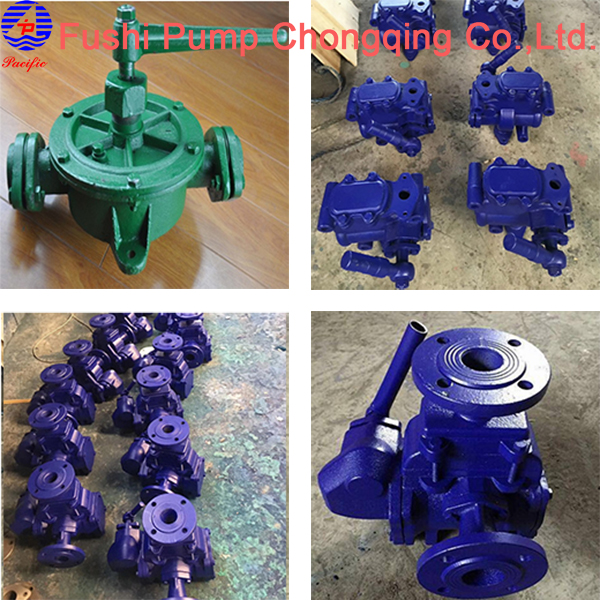
Product showcase:(In addition, please provide the parameter of the marine pump you need and we can customize the suitable type for you.)
| Marine Hand Pump | |
|
|
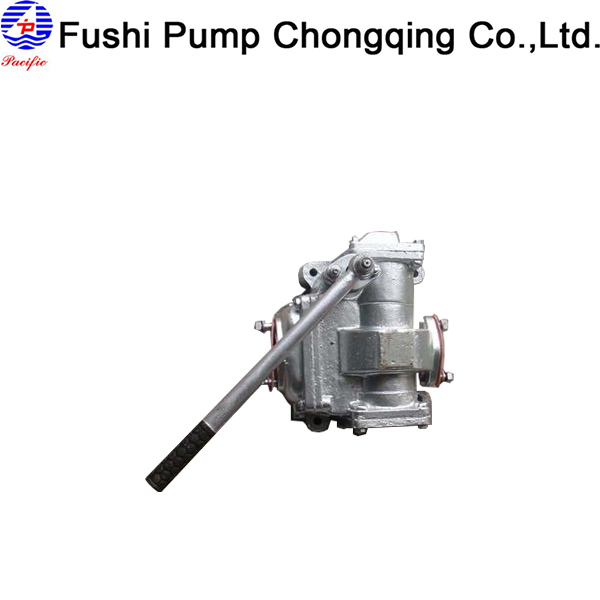
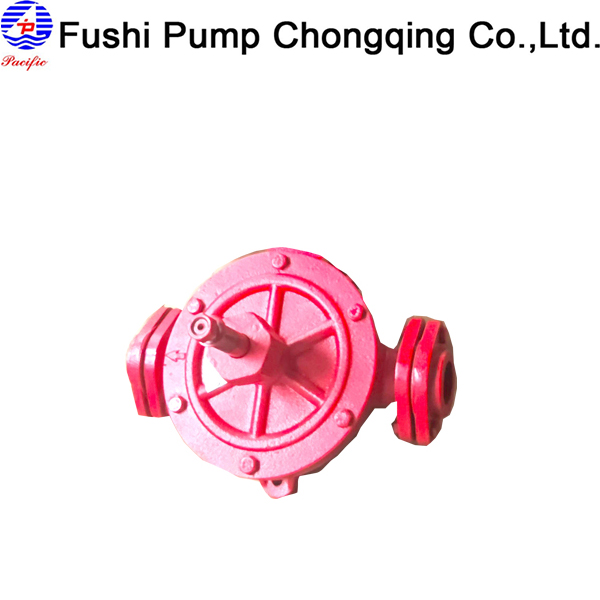
Photos of Marine Hand Pump